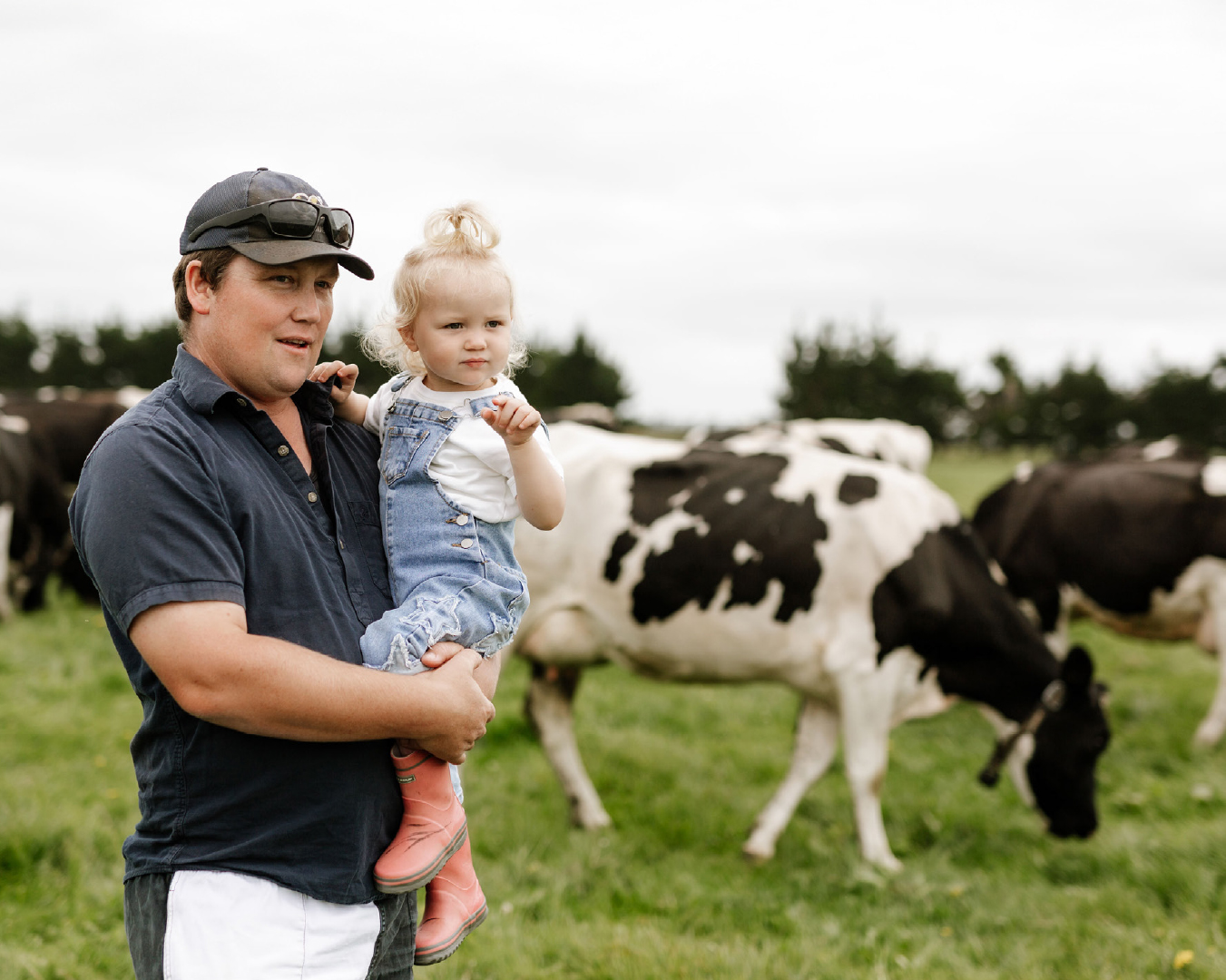
Ben McConnell farms near Hinds in mid-Canterbury, running multiple herds with a long-standing focus on udder health. That track record put him in good company when World Wide Sires went looking for farms to participate in a study validating the traits behind their Mastitis ResistantPRO® designation.
How the study worked
Twenty-eight herds took part in total, with McConnell’s operation contributing two of them. Each participating farm kept detailed records of clinical mastitis cases and herd-tested regularly for somatic cell count (SCC). His team’s existing data discipline made the fit obvious from the start.
The study was designed to validate the cow traits that feed into World Wide Sires’ Mastitis ResistantPRO® programme — a sire designation built on genetic indices predicting lower SCC and reduced clinical mastitis incidence in daughters.
Reading the numbers
McConnell’s SCC results over the season reflected consistent on-farm effort. His herds averaged 58 in January, with a season-to-date average of 75 to the factory — figures that positioned them well within the study cohort.
Beyond his own results, the broader dataset revealed a strong genetic signal. Across participating farms, a clear relationship emerged between the WWS Mastitis and SCS trait indices and real-world clinical case rates and SCC threshold performance. The connection between recorded genetics and herd outcomes was difficult to ignore.
Sire selection and mastitis resistance
Breeding decisions carry more weight when the underlying data is solid. McConnell found that working with Mastitis ResistantPRO® designated sires gave his team a clearer basis for mating choices, rather than relying on general performance estimates.
What the study reinforced for him was that mastitis resistance is not a single lever. Selection pressure on SCC and clinical mastitis incidence pulls in the same direction because both traits share a common genetic foundation. Farmers who prioritise one tend to see movement in the other.
Genetics and management working together
No breeding programme replaces sound herd management, but the two compound each other over time. McConnell’s participation in the study gave his team a sharper picture of where their genetics stood relative to other high-performing herds, and a stronger case for continuing to select on mastitis resistance as a core part of their breeding strategy.
How the study worked
Twenty-eight herds took part in total, with McConnell’s operation contributing two of them. Each participating farm kept detailed records of clinical mastitis cases and herd-tested regularly for somatic cell count (SCC). His team’s existing data discipline made the fit obvious from the start.
The study was designed to validate the cow traits that feed into World Wide Sires’ Mastitis ResistantPRO® programme — a sire designation built on genetic indices predicting lower SCC and reduced clinical mastitis incidence in daughters.
Reading the numbers
McConnell’s SCC results over the season reflected consistent on-farm effort. His herds averaged 58 in January, with a season-to-date average of 75 to the factory — figures that positioned them well within the study cohort.
Beyond his own results, the broader dataset revealed a strong genetic signal. Across participating farms, a clear relationship emerged between SCS trait indices and real-world clinical case rates and SCC threshold performance. The connection between recorded genetics and herd outcomes was difficult to ignore.
Sire selection and mastitis resistance
Breeding decisions carry more weight when the underlying data is solid. McConnell found that working with Mastitis ResistantPRO® designated sires gave his team a clearer basis for mating choices, rather than relying on general performance estimates.
What the study reinforced for him was that mastitis resistance is not a single lever. Selection pressure on SCC and clinical mastitis incidence pulls in the same direction because both traits share a common genetic foundation. Farmers who prioritise one tend to see movement in the other.
Genetics and management working together
No breeding programme replaces sound herd management, but the two compound each other over time. McConnell’s participation in the study gave his team a sharper picture of where their genetics stood relative to other high-performing herds, and a stronger case for continuing to select on mastitis resistance as a core part of their breeding strategy.
One thing we see – further research by World Wide Sires NZ into profitability, better breeding and disease resistance is equipping farmers with better insights into their herds.